What if the goal of longevity is not simply to live longer, but to remain healthy, active, and vital for as many of those years as possible?
This question is at the heart of the growing healthspan trend.
For many years, conversations around aging have largely centered on lifespan: how many years we can add to human life. But living longer does not necessarily mean spending more years in good health. The more important question may be what happens during those additional years—whether we can maintain metabolic balance, physical function, cellular resilience, and overall vitality as we age.
This shift in perspective is changing how researchers and the health and nutrition industry think about longevity. Instead of looking only for ways to extend life, increasing attention is being placed on the biological mechanisms that may help us maintain health for longer.
One of the pathways attracting considerable scientific interest is SIRT1.
From Lifespan to Healthspan: Why SIRT1 Matters
While lifespan tells us how long we live, healthspan asks how long we can remain healthy and functional. Healthspan research explores the biological processes that help maintain metabolic balance, cellular function, resilience, and physical vitality as we age. In the midst, SIRT1 has emerged as the key focus to achieve healthspan.
SIRT1 is one of seven proteins belonging to the sirtuin family. As a NAD⁺-dependent deacetylase, SIRT1 acts as an important regulator of multiple cellular processes involved in energy metabolism, cellular stress responses, mitochondrial function, inflammatory signaling, and cellular maintenance.
Its connection with aging has attracted particular interest. Research in model organisms has shown that manipulating sirtuin-related pathways can influence lifespan. For example, activation of the homolog of SIRT1 in Caenorhabditis elegans sirtuin has been associated with lifespan extension by around 30%.1
Multiple biological processes associated with SIRT1, including:2
- Energy and metabolic regulation
- Cellular stress responses
- Mitochondrial function
- Inflammation-related signaling
- Cellular maintenance and adaptation
The question is can we modulate SIRT1? And this is where Black Ginger becomes particularly interesting.
The Black Ginger Connection: KPMFs and SIRT1
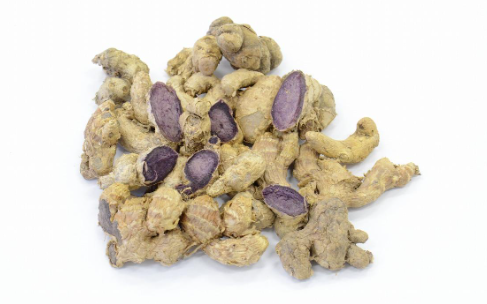
Kaempferia parviflora, commonly known as Black Ginger, is a plant traditionally used in Southeast Asia. Black Ginger characterizes by distinctive group of phytochemicals, collectively referred to as Kaempferia parviflora methoxyflavones (KPMFs). The KPMFs are considered important contributors to the biological properties associated with Black Ginger.
But the story becomes particularly intriguing when we look beyond the plant itself and into the interaction between its phytochemicals and cellular pathways. Research conducted through collaboration involving Tokiwa Phytochemical and the University of Tokyo investigated the relationship between KPMFs and SIRT1. The research identified 3,5,7,3′,4′-pentamethoxyflavone as a compound capable of directly activating SIRT1 in experimental research.3
This finding provided a new perspective on Black Ginger in the conversations of healthspan. The question then became—How can this distinctive phytochemical profile be translated into a consistent ingredient for modern nutrition and health applications?
From Black Ginger to SIRTMAX
This is where SIRTMAX enters the story.
SIRTMAX® is Tokiwa Phytochemical’s standardized Kaempferia parviflora extract, developed to provide a consistent and concentrated profile of the characteristic KPMFs found in Black Ginger.
Research on SIRTMAX, including human clinical studies, has subsequently explored a range of physiological outcomes, including body composition and weight management, glucose-related parameters, vascular function, dry-eye symptoms, and skin-related outcomes.
These findings are important because they align with the broader concept of healthspan, which is not defined by a single physiological endpoint, but rather by the ability to maintain multiple aspects of health and physiological function over time. The potential significance of SIRTMAX therefore lies not in positioning it as a single-purpose ingredient, but in broader science of maintaining health and functional well-being throughout the aging process.
References:
- Tissenbaum HA, Guarente L. Increased dosage of a sir-2 gene extends lifespan in Caenorhabditis elegans. Nature. 2001 Mar 8;410(6825):227-30.
- Meng D, Zhang F, Yu W, Zhang X, Yin G, Liang P, Feng Y, Chen S, Liu H. Biological Role and Related Natural Products of SIRT1 in Nonalcoholic Fatty Liver. Diabetes Metab Syndr Obes. 2023 Dec 8;16:4043-4064.
- Zhang M, Lu P, Terada T, Sui M, Furuta H, Iida K, Katayama Y, Lu Y, Okamoto K, Suzuki M, Asakura T, Shimizu K, Hakuno F, Takahashi SI, Shimada N, Yang J, Ishikawa T, Tatsuzaki J, Nagata K. Quercetin 3,5,7,3′,4′-pentamethyl ether from Kaempferia parviflora directly and effectively activates human SIRT1. Commun Biol. 2021 Feb 19;4(1):209.