News
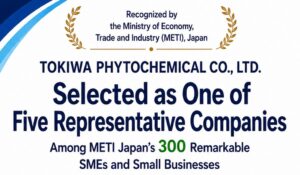
Tokiwa as one of the respresentatives for GX categories
We are excited to share that Tokiwa has been selected in the GX (Green Transformation) category as one of the five representative companies among






We are excited to share that Tokiwa has been selected in the GX (Green Transformation) category as one of the five representative companies among
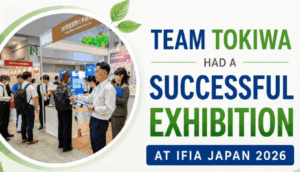
The TOKIWA PHYTOCHEMICAL CO., LTD. team would like to extend a heartfelt thank you to everyone who stopped by our booth at ifia japan
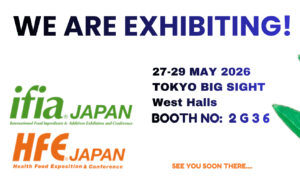
Announcement: Exhibition at IFIA Japan 2026 Dear Valued Customers, We are pleased to announce that we will be exhibiting at ifia japan 2026, just
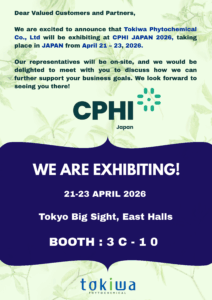
Three Days at Tokyo Big Sight in April 2026From April 21 to 23, 2026, TOKIWA Phytochemical Co., Ltd. proudly exhibited at CPHI Japan 2026,
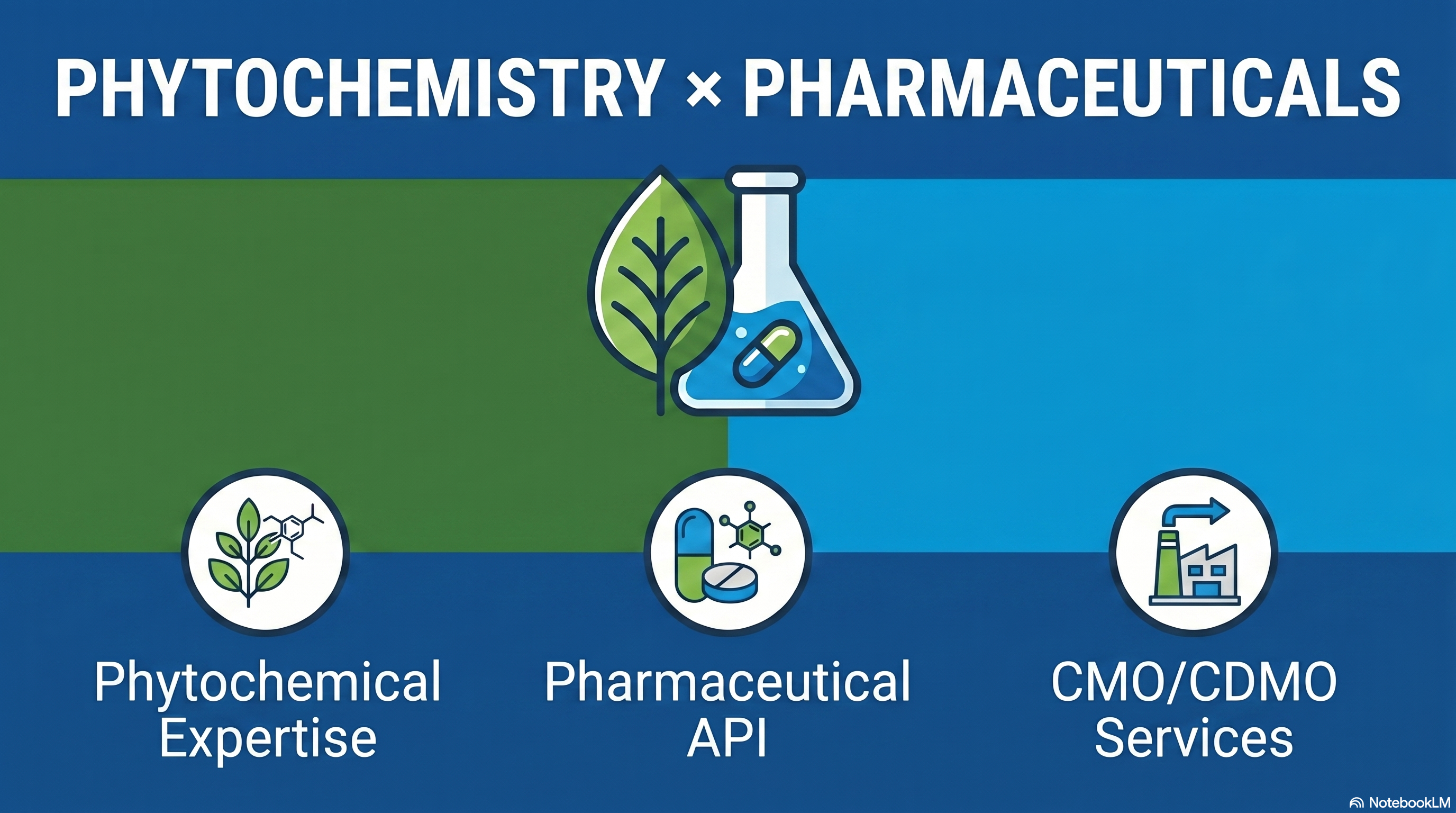
April 3rd, 2026 As a premier global supplier of high-quality botanical extracts, TOKIWA Phytochemical Co., Ltd. combines over 70 years of heritage with world-class
TOKIWA Phytochemical Co., Ltd. (hereinafter “TOKIWA”) is thrilled to announce that VENETRON®, has been honored as one of the three finalists for the prestigious